OZONE THERAPY
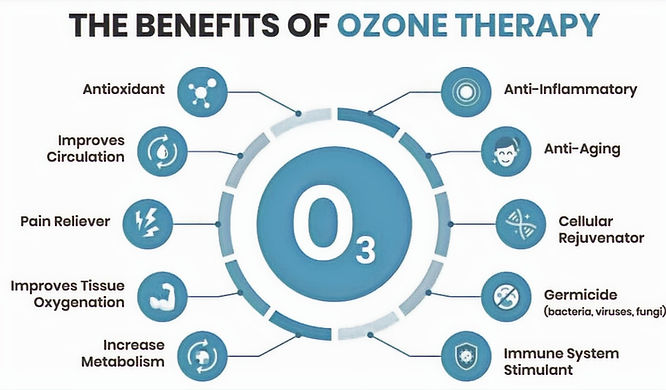
Immune boosting, anti-inflammatory, improves microcirculation, germicidal for infection, and improves athletic performanc
-
Regulates the immune system
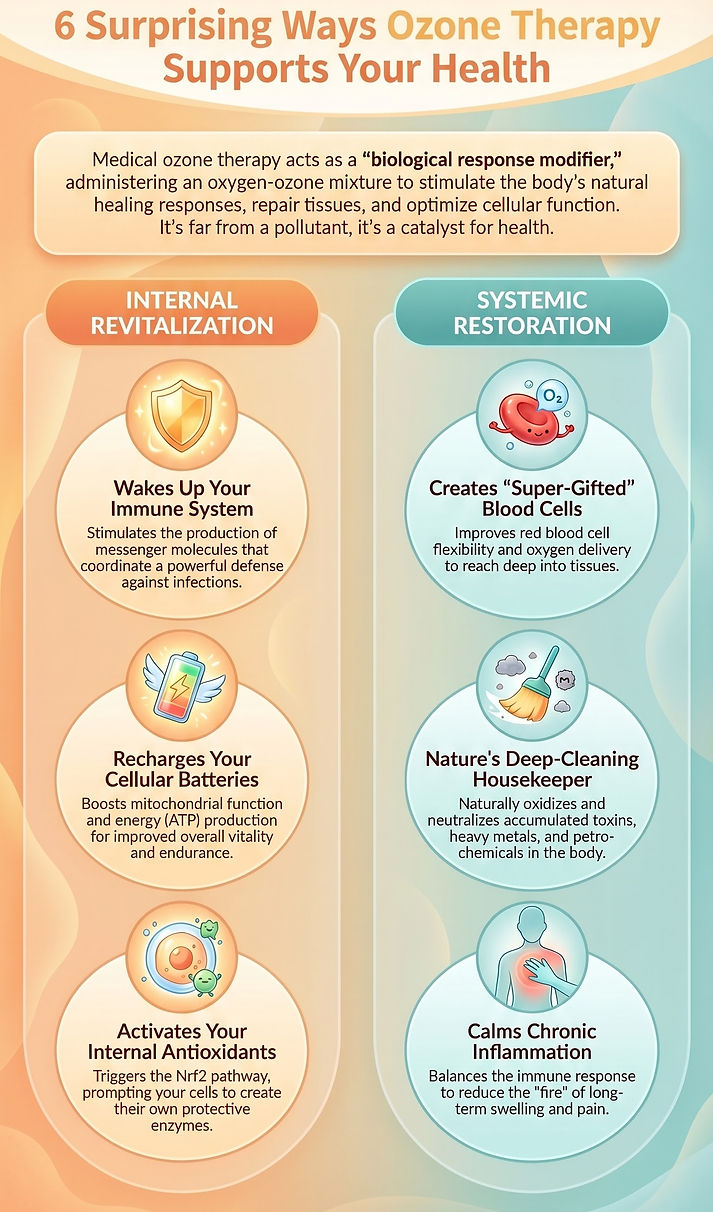
When the immune system is overactive (as in autoimmune disease), ozone helps calm it. When it is underactive (as in cancer, AIDS, or chronic infections), ozone helps stimulate it. This effect is due to ozone’s action on white blood cell membranes, triggering the production of immune messenger molecules called cytokines, such as gamma interferon, interleukin-2, colony stimulating factor, and TNF-alpha. -
Increases cellular oxygen uptake
It stimulates the enzyme diphosphoglycerate (DPG), which facilitates the release of oxygen from hemoglobin so cells can use it efficiently. Without enough DPG, cells become oxygen-starved—a common problem in diabetics. -
Improves circulation
It enhances the blood’s flow characteristics, allowing more oxygen-carrying hemoglobin to reach the capillaries. Patients with chronic inflammatory conditions often suffer from impaired circulation, making this benefit especially valuable. -
Ozone boosts antioxidant protection
It increases antioxidant defenses more than any other known therapy, including high-dose vitamin C. Many chronic illnesses are associated with depleted antioxidant levels. -
Stimulates mitochondrial function
Reduced mitochondrial energy production is the underlying driver of many degenerative diseases—from diabetes to heart disease to cancer. Ozone can often help correct this dysfunction. -
Antimicrobial effect
Ozone has powerful antibacterial, antiviral, and anti-fungal properties, making it effective for treating infections, wounds, and conditions resistant to traditional treatments. -
Detoxification effect
Ozone therapy aids in detoxifying the body by breaking down harmful substances and supporting the elimination of toxins, including heavy metals and other pollutants. -
Pain and Inflammation Reduction
By reducing inflammation and oxidative stress, ozone therapy can help alleviate pain associated with conditions like arthritis, fibromyalgia, and other chronic inflammatory diseases. -
Wound Healing
Ozone accelerates wound healing by promoting cell regeneration, enhancing blood flow, and reducing the risk of infection, making it useful for diabetic ulcers, bedsores, and other hard-to-heal wounds. -
Cognitive Enhancement
Oxygen-enriched Insufflation Therapy has been linked to cognitive benefits. Improved oxygenation to the brain can enhance cognitive function, concentration, and mental clarity, making it an attractive option for those seeking cognitive support.
-
Major Autohemotherapy (MAH)
Major Autohemotherapy (MAH) is one of the most common types of ozone therapy. It involves withdrawing a small amount of the patient’s blood, mixing it with ozone, and then reintroducing the ozonated blood back into the patient’s bloodstream. This type of therapy is used to improve circulation, boost the immune system, and promote healing. -
EBOO Therapy
EBOO (Extracorporeal Blood Oxygenation and Ozonation) therapy is an advanced form of ozone therapy that involves the continuous circulation of blood through a specialized machine, where it is enriched with oxygen and ozone before being returned to the body. This process offers a comprehensive detoxification effect, boosts oxygen delivery, and enhances the immune system, providing systemic health benefits. -
Ozone Injection Therapy
Ozone injection therapy involves the direct injection of ozone into specific areas of the body, such as joints or muscles. This type of therapy is typically used to treat pain and inflammation. -
Ozone Insufflation
Ozone insufflation is a form of ozone therapy that involves introducing ozone gas into the body through natural orifices, such as the rectum, vagina, ears, or bladder, to deliver its therapeutic effects. This method allows ozone to be absorbed directly into the mucous membranes and tissues, providing localized and systemic health benefits.
Methods of Administration of Ozone:
_JPG.jpg)